Every squeeze, ranked by what actually matters.
Two squeezes can look identical on a chart and behave nothing alike. We sort them by three things that do the separating: whether the squeeze has carried an edge on that name over 22 years, how many timeframes are squeezing together, and whether the trend is stacked behind it.
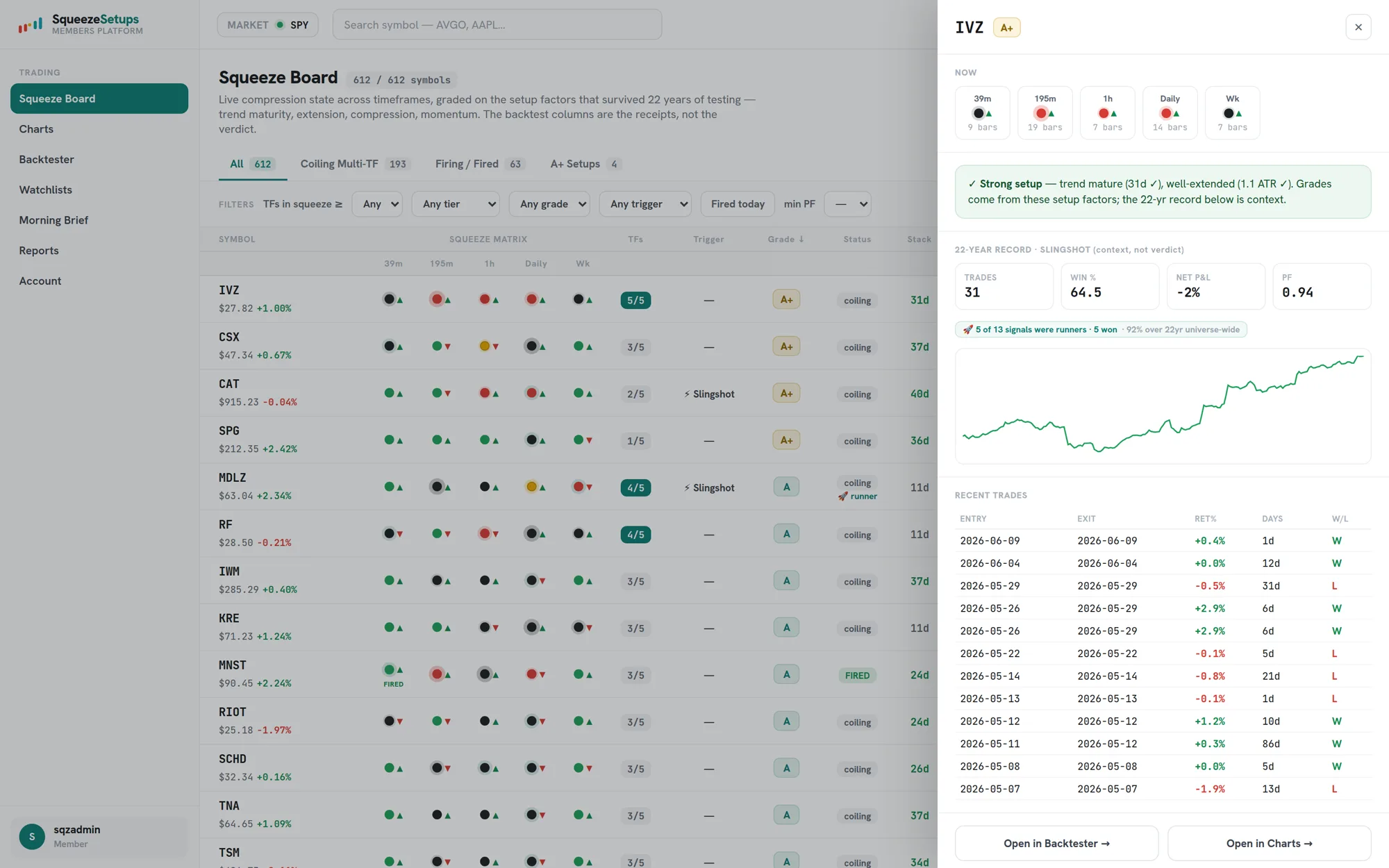
Three signals, one short list.
The three things that decide whether a squeeze is worth your attention, each one you can check yourself.
Has the squeeze paid on this name
Every symbol carries its own 22-year squeeze record. We surface the names where that record has been positive and rank by how strong it is. It is the edge, not a promise on the next trade.
How many timeframes are in a squeeze
One squeeze is a coin flip. Several timeframes compressing on the same name at the same time is a different animal, and the board counts them for you.
Which way the energy leans
We only rank squeezes where the moving averages are stacked up. The squeeze itself does not tell you direction.
The backtest is the edge, never the promise.
We rank by a name's 22-year squeeze record because it tells you whether the setup has carried an edge there at all. A name the squeeze has never paid on does not belong at the top of your list.
What it is not is a forecast. No backtest predicts the next trade, and we never dress one up as if it does. The record is the receipts behind the rank, open on every symbol for you to read.
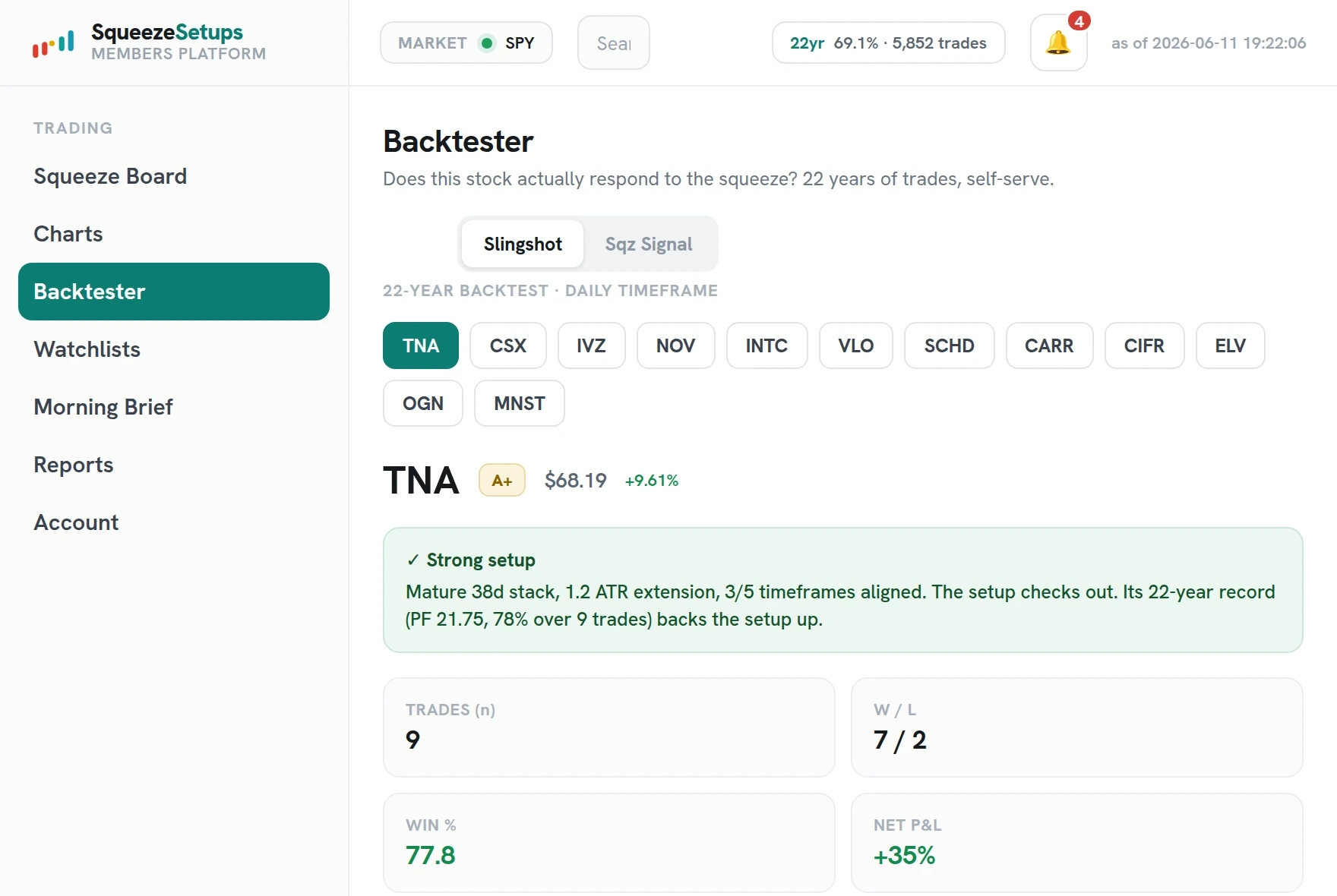
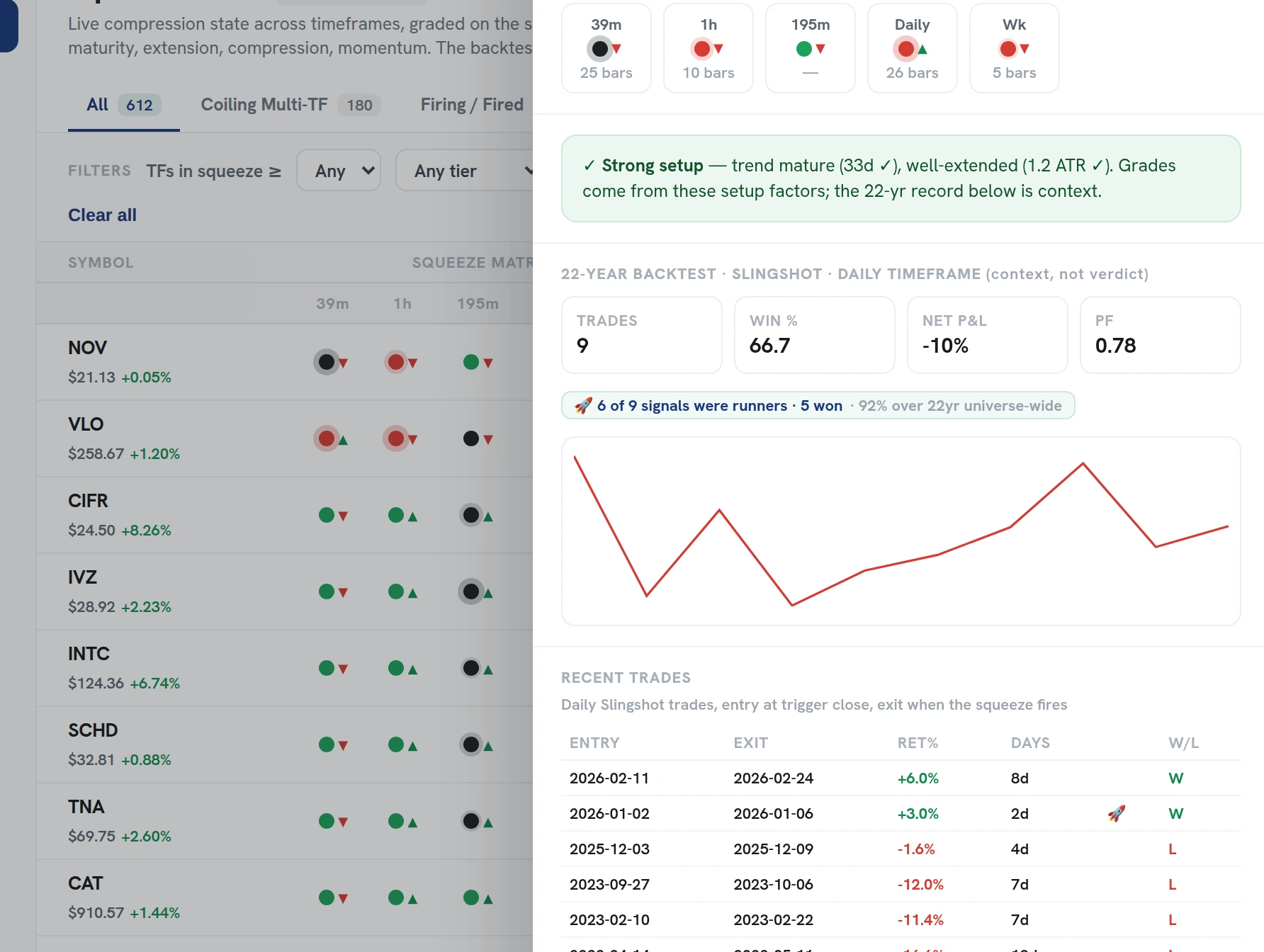
Every setup spells out where it stands.
Click any squeeze and you get the read in plain language: the three signals, which line up and which do not, with nothing hidden behind a score.
- Signal by signal, you see which of the three are working and which are missing.
- What would strengthen it, like a name that needs a third timeframe to start squeezing.
- Descriptive language, always. We tell you what the setup is, not what the trade will do.
This turns a scan into a short list.
A list of squeezes asks you 200 questions. Ranking by edge, confluence, and trend answers most of them before you arrive, and shows the work for the rest.
Comparable setups
A strong rank on one stock means the same thing on another, because both are measured the same three ways.
Faster triage
Start at the top and work down. The board has already ordered the homework.
No black box
Every rank traces to three signals, and the backtest behind it is one click away.
Stop guessing which squeeze is which.
Every squeeze ranked by edge, confluence, and trend, with 22 years of receipts behind it.