Does the Squeeze Actually Work? A 22-Year Study
Key takeaways
- A bare squeeze won about 54% of the time over 22 years, no better than buying on a random day.
- Filtered for a momentum turn, a stacked trend, and confirmation, the two setups won 67% to 69%.
- That edge held in every five-year era we tested, from 2004 through 2026, including crashes and bull runs.
- It is still a backtest, not a promise. Roughly one trade in three lost, and the figures are before costs.
The squeeze works, but only with filters. In our 22-year backtest across 614 stocks, buying simply because a squeeze was on won about 54% of the time, the same as a random entry.
Once we required a momentum turn, a stacked trend, and confirmation, the win rate rose to between 67% and 69%, and it stayed in that range in every era we measured.
Does buying a squeeze make money?
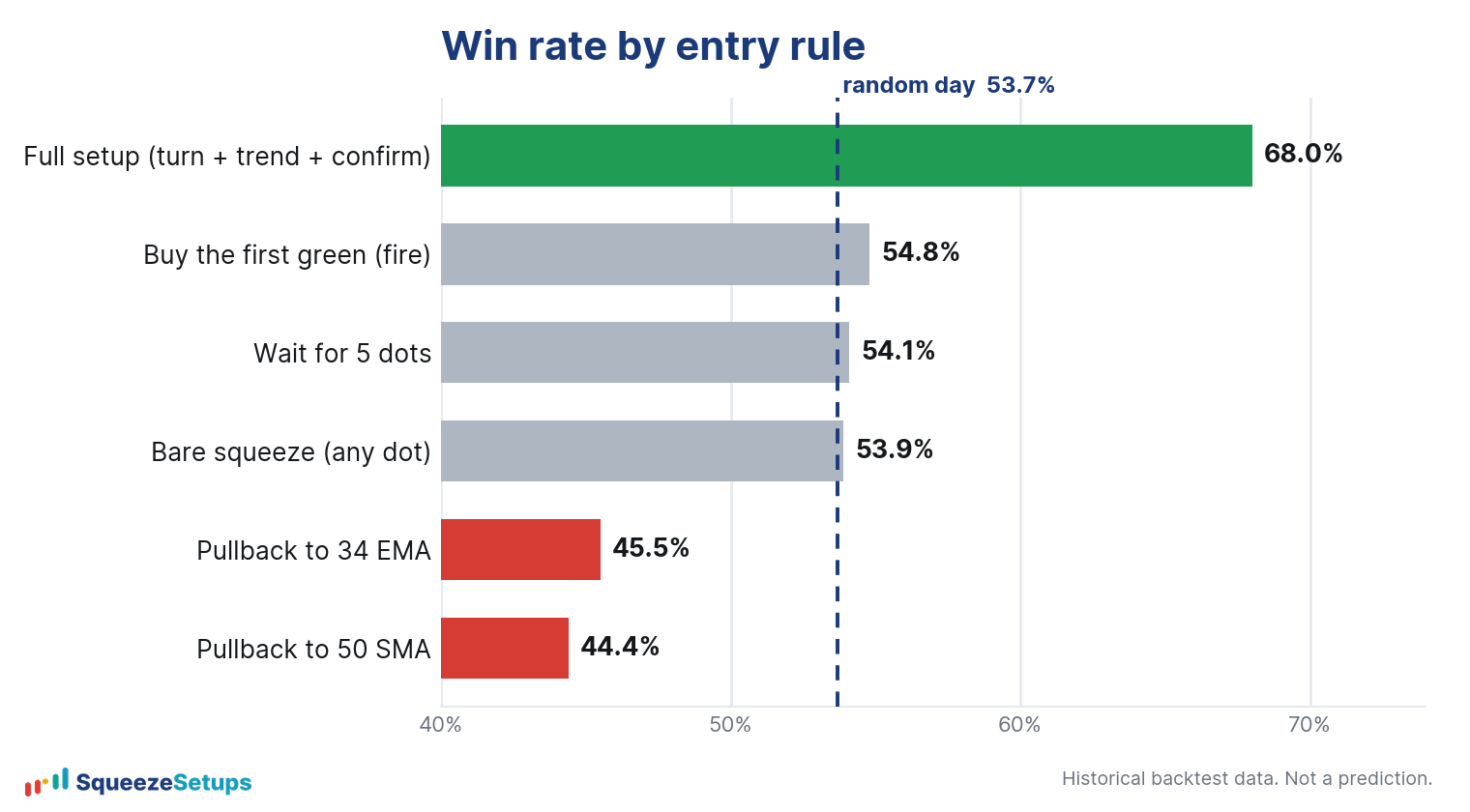
On its own, no. We held the exit constant, exiting when the squeeze fires, and changed only the entry rule. With the entry rule as the only variable, the records came out like this:
- Bare squeeze entry: won 53.9% of the time.
- Random-day entry held for the same length: won 53.7%.
- Popular shortcuts did not help either, and buying a pullback to the 34 EMA or 50 SMA during a squeeze was worse than random.
What makes the squeeze work?
Three filters, applied on top of the squeeze: a momentum turn in your direction, a stacked moving-average trend, and Edge Signal confirmation that real momentum is behind the move. Applied to the same universe of squeezes, the two setups we trade produced these daily records:
| Setup | Win rate | Trades | Avg hold |
|---|---|---|---|
| Slingshot Squeeze | 69.1% | 5,852 | About 13 days |
| Squeeze Signal | 67.4% | 4,496 | About 15 days |
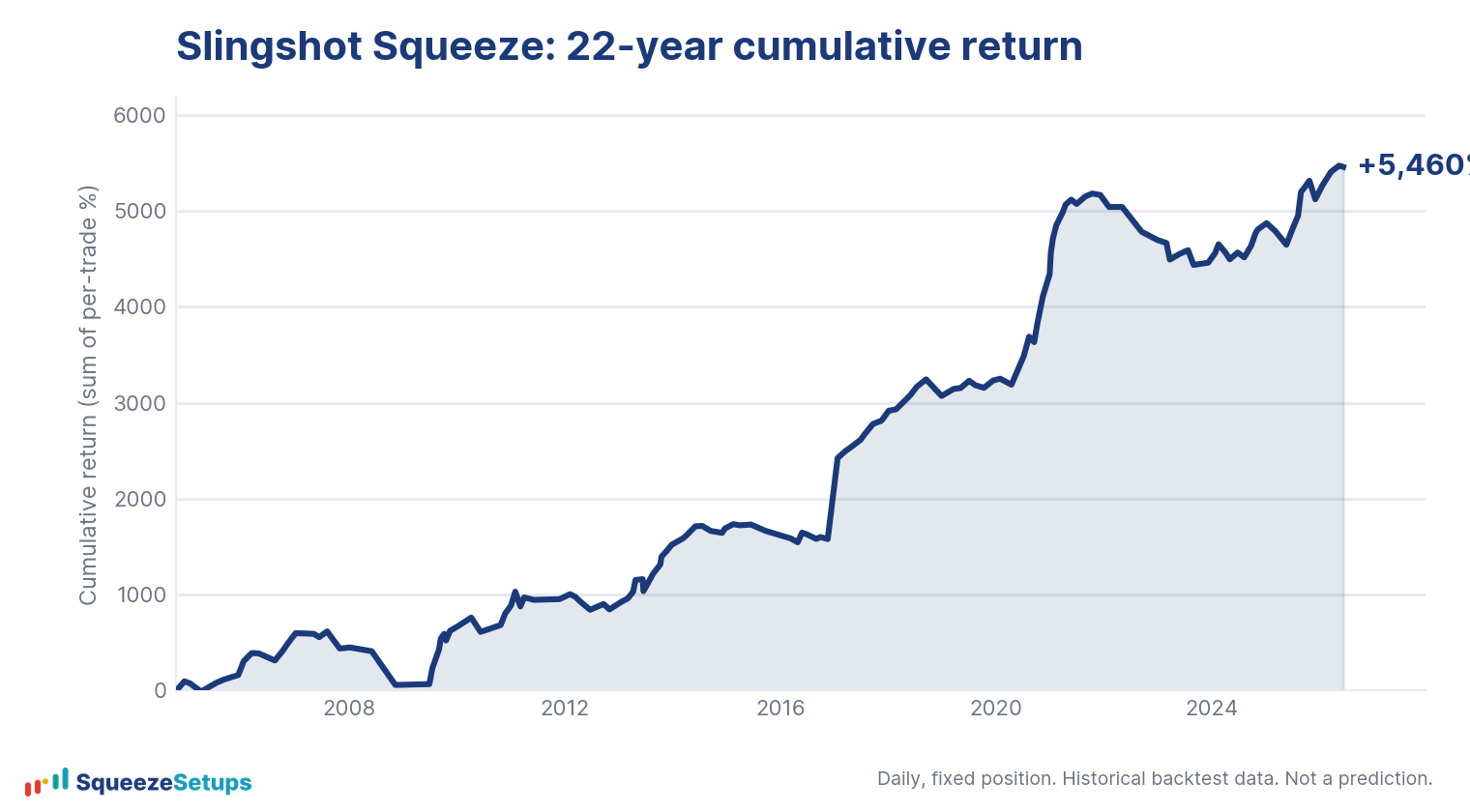
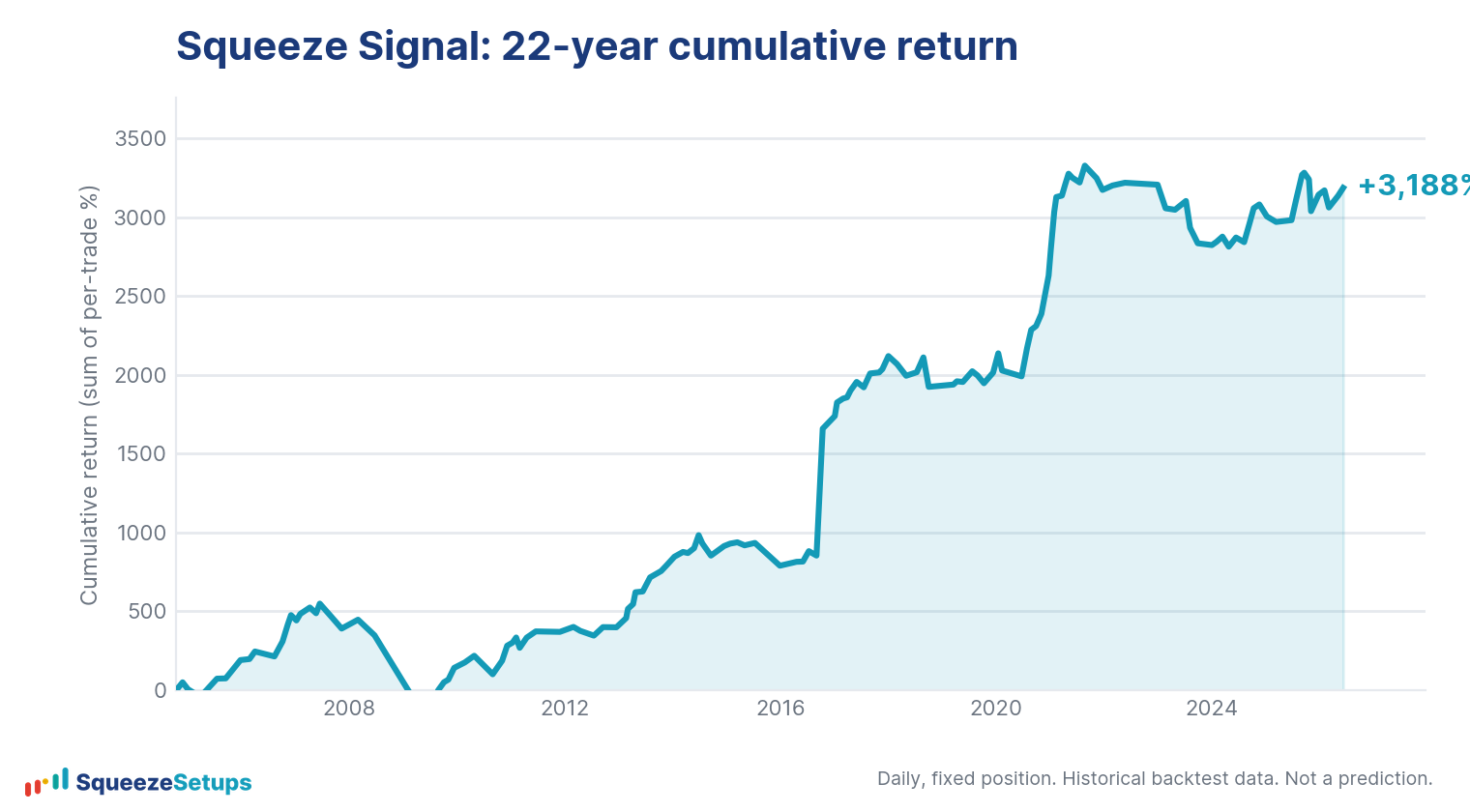
The dots and stocks are the same. The only thing that changed was which squeezes we were willing to act on. Summed on a fixed position over the 22 years, both build their return steadily rather than on a handful of outliers:
Has the edge held over time?
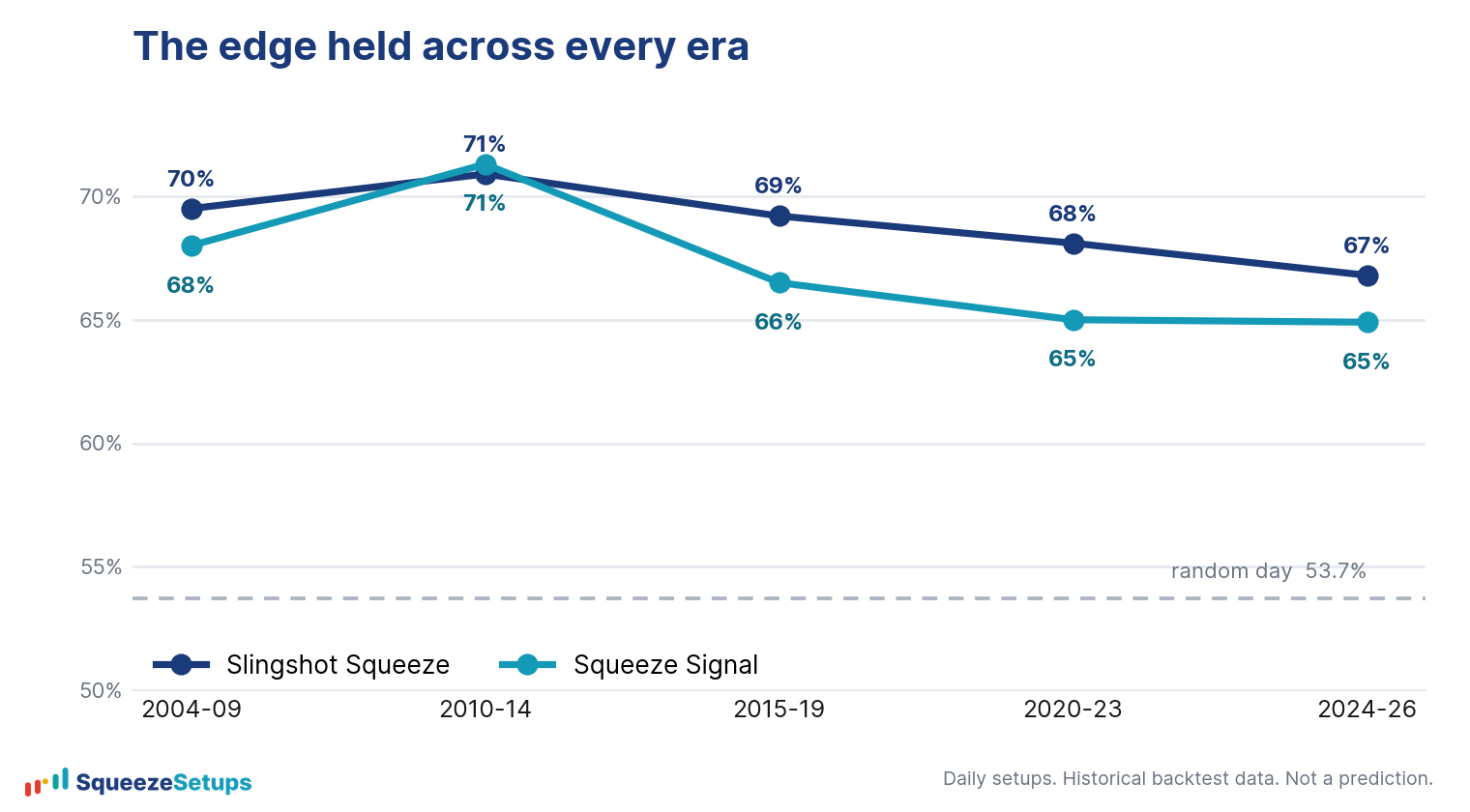
Yes. A number that only works in one stretch is usually luck, so this test matters. We split the 22 years into five eras.
The Slingshot daily win rate stayed between 66.8% and 70.9% in every one. The Squeeze Signal stayed between 64.9% and 71.3%. Both sat well above the random-day baseline through the 2008 crash, the 2020 crash, and the bull runs in between.
What the squeeze does not promise
Roughly one trade in three still lost in our sample. The figures above are from historical backtests, not a forecast, and they are measured before commissions and slippage.
The setups are long-biased, because in our testing the short side won often but lost more when it lost. A win rate is an edge across many trades, not a guarantee on the next one.
How we tested this
The test rested on a few fixed conditions:
- Data: 22 years of daily data, from 2004 to 2026, across 614 stocks.
- Entry-rule comparison: the exit was held identical, exiting when the squeeze fires, so the only variable was the entry.
- Per-setup figures: the full Slingshot Squeeze and Squeeze Signal triggers on the daily timeframe.
- Constraints: long only, one entry per qualifying bar, and before costs.
We lead with win rate because a few outlier moves can flatter average return, and the hit rate is the more honest, repeatable measure.
Please note: This research is based on historical backtest data. It is NOT a prediction, and it is NOT financial advice.
Related: Why a bare squeeze has no edge · What is the Squeeze? · The Slingshot Squeeze, explained.