Crocs: The Daily Squeeze Signal Just Fired as the Upgrades Pile In
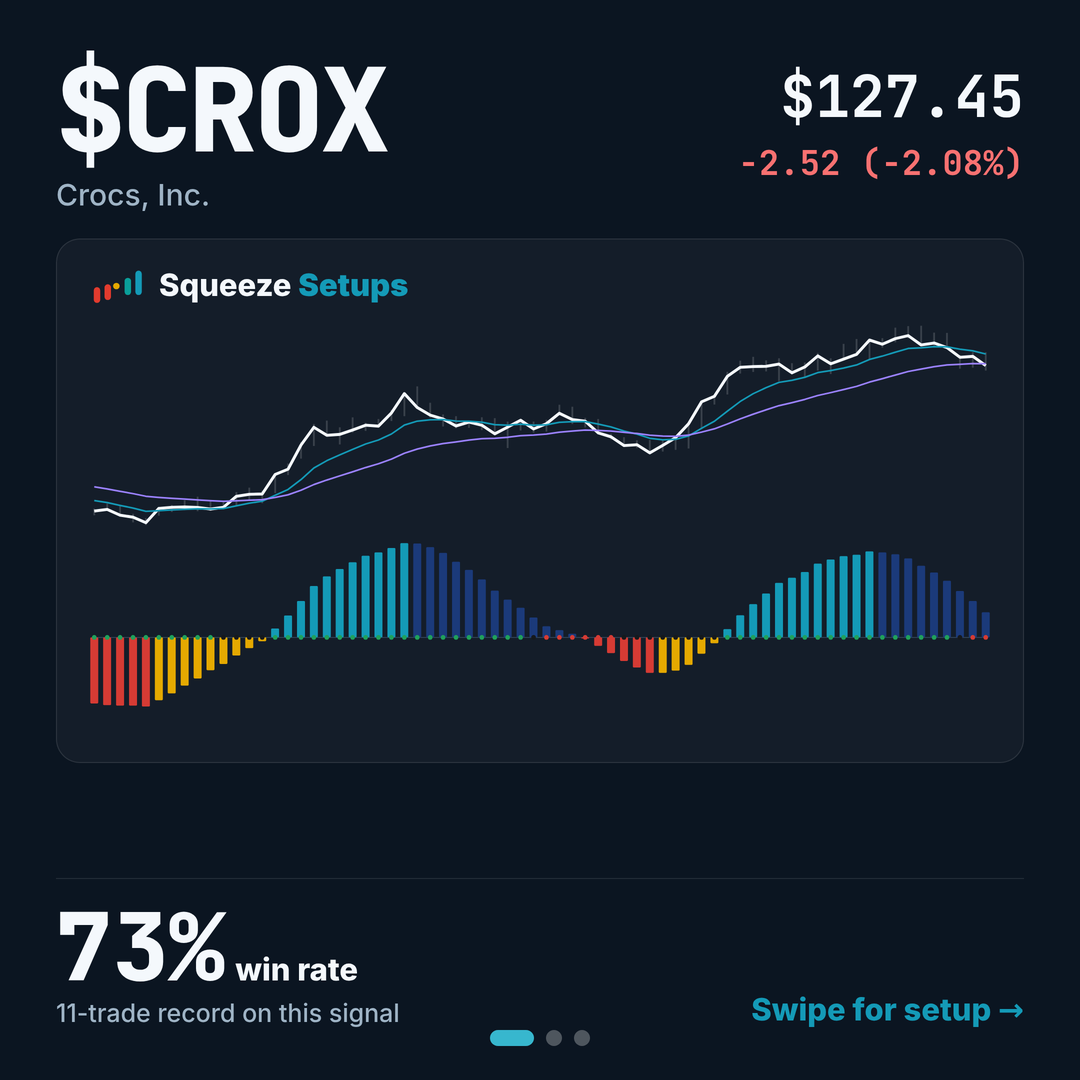
The setup on our board
Crocs ($CROX) is grade A on our squeeze board and the daily Squeeze Signal just fired, so this is a live signal rather than a watch. Five timeframes are in a squeeze at the same time, and the move is already running off the trigger. The card carries the teal fired label and the record tied to the signal that fired.
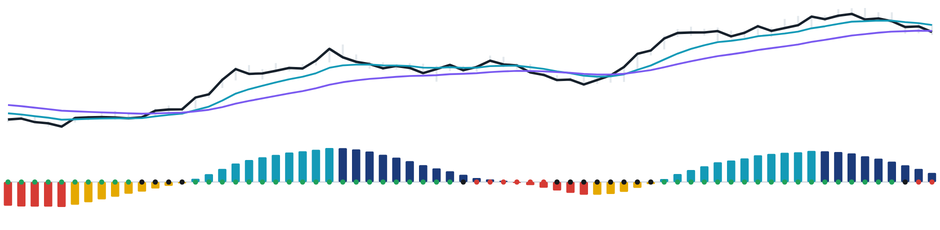
What the 20-year record says
When this Squeeze Signal has fired on Crocs historically, the daily record is a 73% win rate with a 2.0 profit factor. That is a real edge in our backtests, not a promise about the next trade. A per-symbol record is context, the receipts, never the verdict.
| Triggers (20-yr backtest) | 11 |
|---|---|
| Win rate | 73% |
| Average per trigger | +4.8% |
| Profit factor | 2.05 |
| Entry | Entry px | Exit px | Held | Result |
|---|---|---|---|---|
| •••••••• | •••• | •••• | ••• | ••••• |
| •••••••• | •••• | •••• | ••• | ••••• |
| •••••••• | •••• | •••• | ••• | ••••• |
| •••••••• | •••• | •••• | ••• | ••••• |
New to the idea? Here is what a squeeze is, and why the trigger inside the squeeze, not the green dot, is the entry.
Why now
The fundamentals line up with the chart. In its Q1 2026 report Crocs beat on both lines, with adjusted EPS of $2.99 against $2.77 expected and revenue of $921.5 million versus about $900.85 million expected. Management raised full-year adjusted EPS guidance to a range of $13.20 to $13.75.
The Street responded. Piper Sandler upgraded the stock to Overweight, Baird moved to Outperform with a $150 target (up from $115), and BofA reiterated a Buy with its target lifted to $145.
The honest tension: management guided Q2 revenue down slightly versus last year, and at roughly $127 the stock is already near the average analyst 12-month target around $121. So the squeeze and the upgrades are doing the heavy lifting here, not a cheap valuation.
How we read it
We grade the setup, not the name. A fired Squeeze Signal on a grade A chart with five timeframes compressed is the alignment we look for, and the 20-year record gives it context. We stay descriptive: this is what the signal has done, with the small print that a past record does not place the next trade.